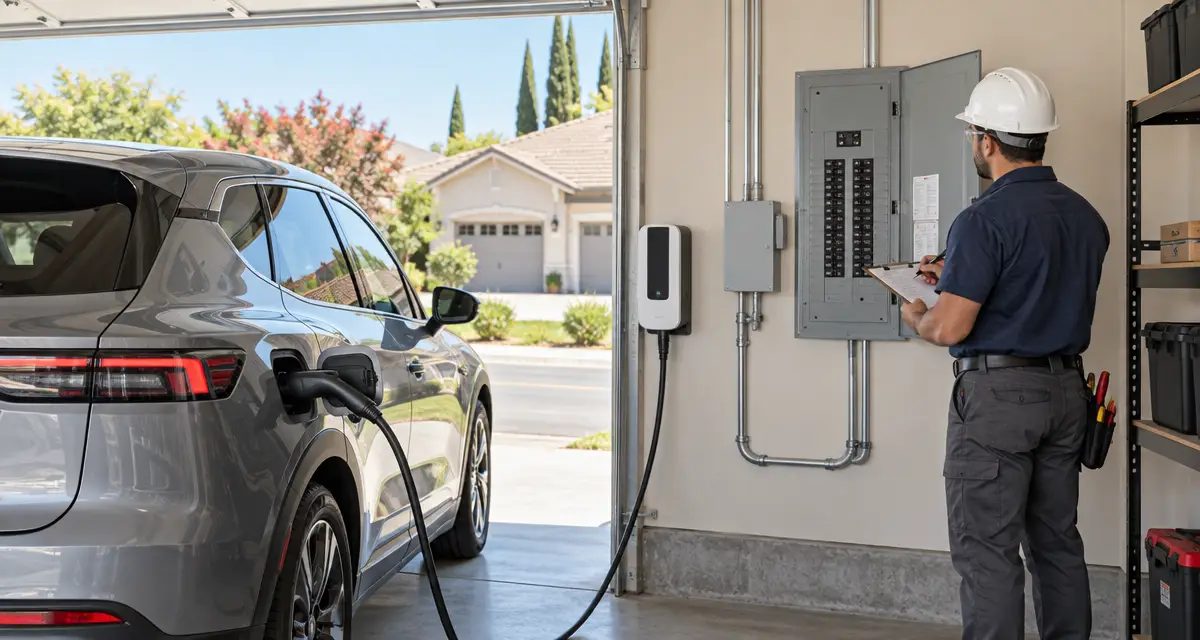
Switching to an electric vehicle is an exciting step towards a greener, more cost-effective way to travel around Rancho Cordova and the greater Sacramento area. The convenience of charging your car overnight in your own garage is a major perk. However, many homeowners have one big question before they commit: will I need to upgrade my electrical panel to install an EV charger?
The answer is, not always. While some homes do require a panel upgrade to safely handle the added electrical load, many don't. The necessity depends on your current electrical system's capacity, the type of charger you want, and your daily electricity usage. This guide will walk you through the key factors so you can make an informed decision about your home EV charger installation.
Understanding EV Charging Levels
The type of charger you choose has the biggest impact on your electrical needs. There are two main levels for home charging:
Level 1 Charging: This is the simplest option. Level 1 chargers use a standard 120-volt wall outlet, the same kind you use for your lamps and television. They don't require any special wiring. The trade-off is speed; a Level 1 charger adds about 2 to 5 miles of range per hour of charging. For most Rancho Cordova homeowners, a Level 1 charger will not require any electrical system changes.
Level 2 Charging: This is the most common choice for home charging stations. Level 2 chargers use a 240-volt circuit, similar to what an electric dryer or oven uses. They are much faster, adding 10 to 60 miles of range per hour. Because they draw significantly more power, a Level 2 charger requires a dedicated 240-volt circuit to be professionally installed. This is where the question of a panel upgrade comes into play.
When is a Panel Upgrade Necessary?
Your home's main electrical panel is the heart of its electrical system. It has a maximum capacity, measured in amps (A), which is typically 100A, 150A, or 200A in modern homes. This panel must safely manage the total electrical load of your entire home—from your air conditioner and refrigerator to your lights and your new EV charger.
An electrician determines if your panel can handle the new charger by performing a "load calculation." This calculation assesses your home's existing electrical demands and adds the new, continuous load of the EV charger. According to our local utility, SMUD, if the total calculated load exceeds 80% of your panel's capacity, an upgrade is required for safety and to comply with the National Electrical Code (NEC).
For example, if you have a 100A panel and your home already uses a significant amount of that capacity for large appliances like an electric water heater, central AC, and an electric stove, adding a 40A or 50A EV charger will likely push you over the safe limit. In this case, a main electrical panel upgrade to 150A or 200A would be necessary.
How to Determine Your Panel's Capacity
You can often find your panel's capacity printed on the main breaker, which is typically the largest switch at the top of your panel. However, just knowing the total amperage isn't enough. You won't know your home's actual load without a professional assessment.
A licensed electrician from Lux Dei Electric can perform a thorough load calculation. We'll inspect your panel, identify your major appliances, and determine the exact capacity available for a new EV charging circuit. This is the only way to know for certain if you can safely add a charger to your existing system.
Alternatives to a Full Panel Upgrade
If a load calculation shows that your panel is nearly at its limit, a full upgrade isn't your only option. Advances in technology provide a few clever alternatives:
- Lower Amperage Chargers: You could opt for a Level 2 charger with a lower amperage setting (e.g., 16A or 24A instead of 40A). It will charge your vehicle more slowly but may fit within your panel's existing capacity.
- Smart Chargers & Load Management Systems: These devices, also known as Energy Management Systems (EMS), monitor your home's total electricity use in real-time. If the overall demand gets close to your panel's limit, the system will temporarily reduce the power going to the EV charger until the demand drops. This prevents overloads without requiring a panel upgrade.
- Circuit Sharing Switches: These devices allow two large appliances, like an EV charger and an electric dryer, to share a single circuit. The switch ensures that only one of the two can operate at any given time, preventing an overload.
An experienced electrician can help you decide if one of these alternatives is a safe and practical solution for your home.
Rancho Cordova Permitting and Inspection
Installing a Level 2 EV charger is not a simple DIY project. In Rancho Cordova, a permit is required for the installation of a new 240-volt circuit. The City of Rancho Cordova's Building and Safety Division oversees this process to ensure all work is done safely and up to code. You can find their checklists and forms on the city's website.
When you hire a licensed contractor like Lux Dei Electric, we handle the entire permitting and inspection process for you. We ensure the installation meets all local and national safety standards, giving you peace of mind. A professional electrical inspection is a mandatory part of this process to verify the safety and compliance of the new installation.
Why Professional Installation is Non-Negotiable
Whether you need a panel upgrade or not, professional installation is crucial. EV chargers handle a high, continuous electrical load, and improper wiring is a serious fire hazard. A qualified electrician will ensure:
- The circuit breaker and wiring are correctly sized for the charger.
- All connections are secure and properly torqued.
- The installation is fully compliant with the NEC and Rancho Cordova's local codes.
- Your home and family are safe.
Ready to enjoy the convenience of charging your EV at home? The first step is a professional assessment. We can help you understand your options, whether it’s a straightforward installation, an alternative load management solution, or a full panel upgrade. Contact Lux Dei Electric today for a consultation in Rancho Cordova, and our expert team will find the safest and most efficient solution for your home.
Sources
- EV charging and your electrical panel - SMUD
- Residential electric vehicles - SMUD
- Forms and Downloads - City of Rancho Cordova